Smash Squad
By Thomas Jebson
(Created: October 2025, Updated: July 2026 - Finished)
Academic Project
Skills & Technologies Used






Supported Platforms

Links

Awards
🏆 Academic Result: 84%
About
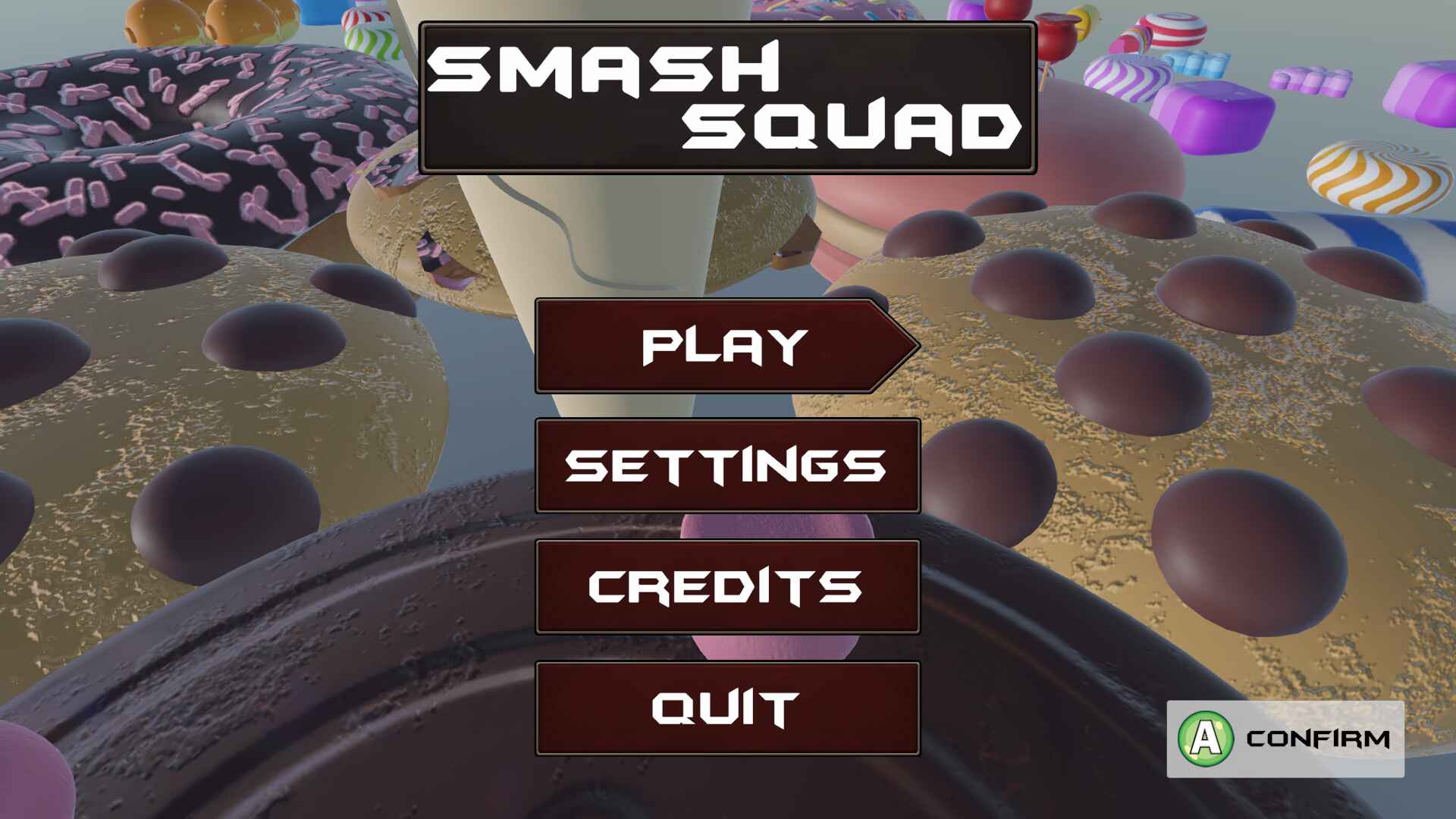
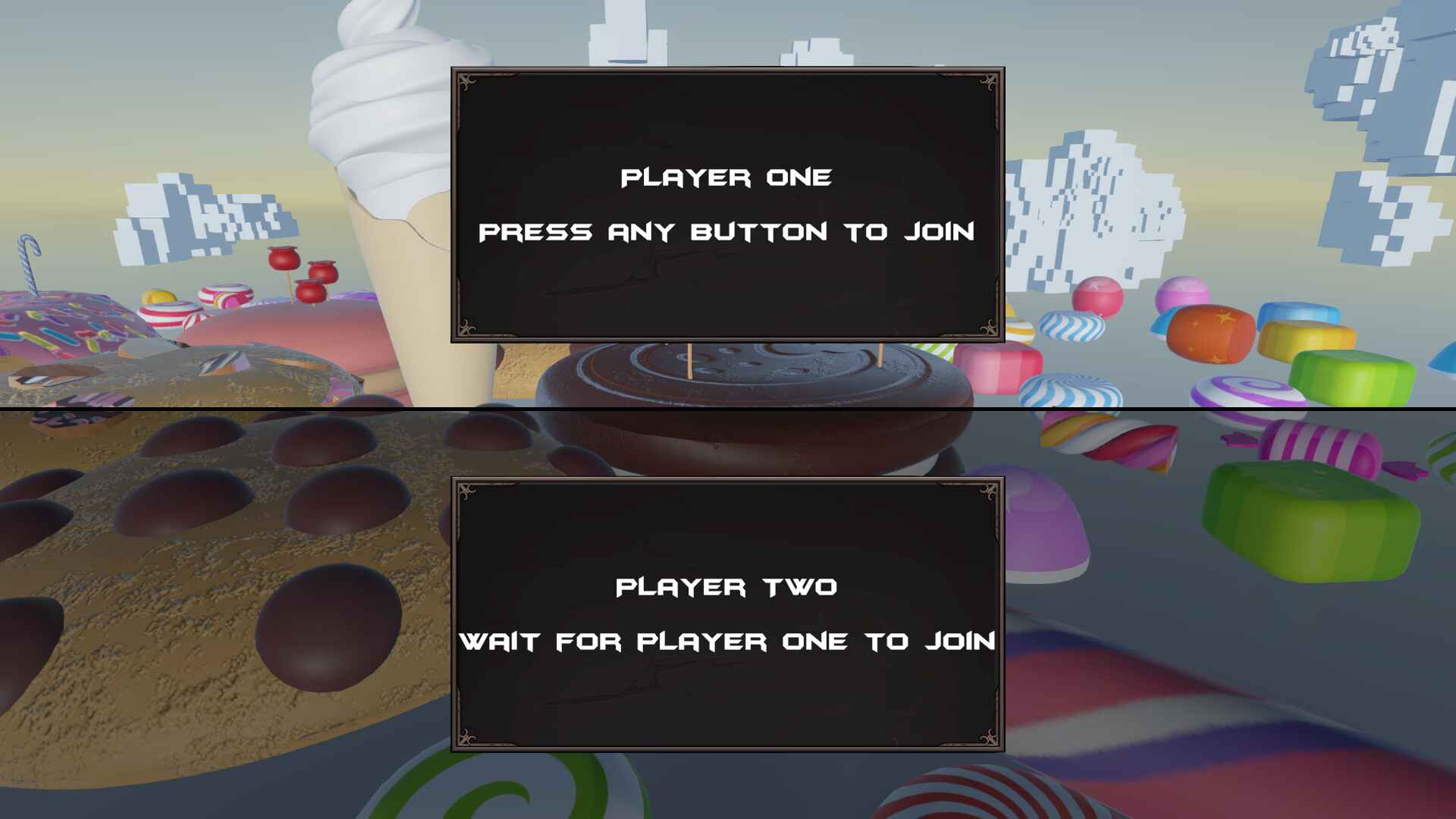
Smash Squad is a 3D, 2 person local multi-player game,
inspired by the classic
playground game King-of-the-Hill.
This game was developed as part of a BSc Games Programming assignment at the University of Northampton for the
Xbox
Series S using Microsoft's Universal Windows Platform (UWP) and Unity 6000.
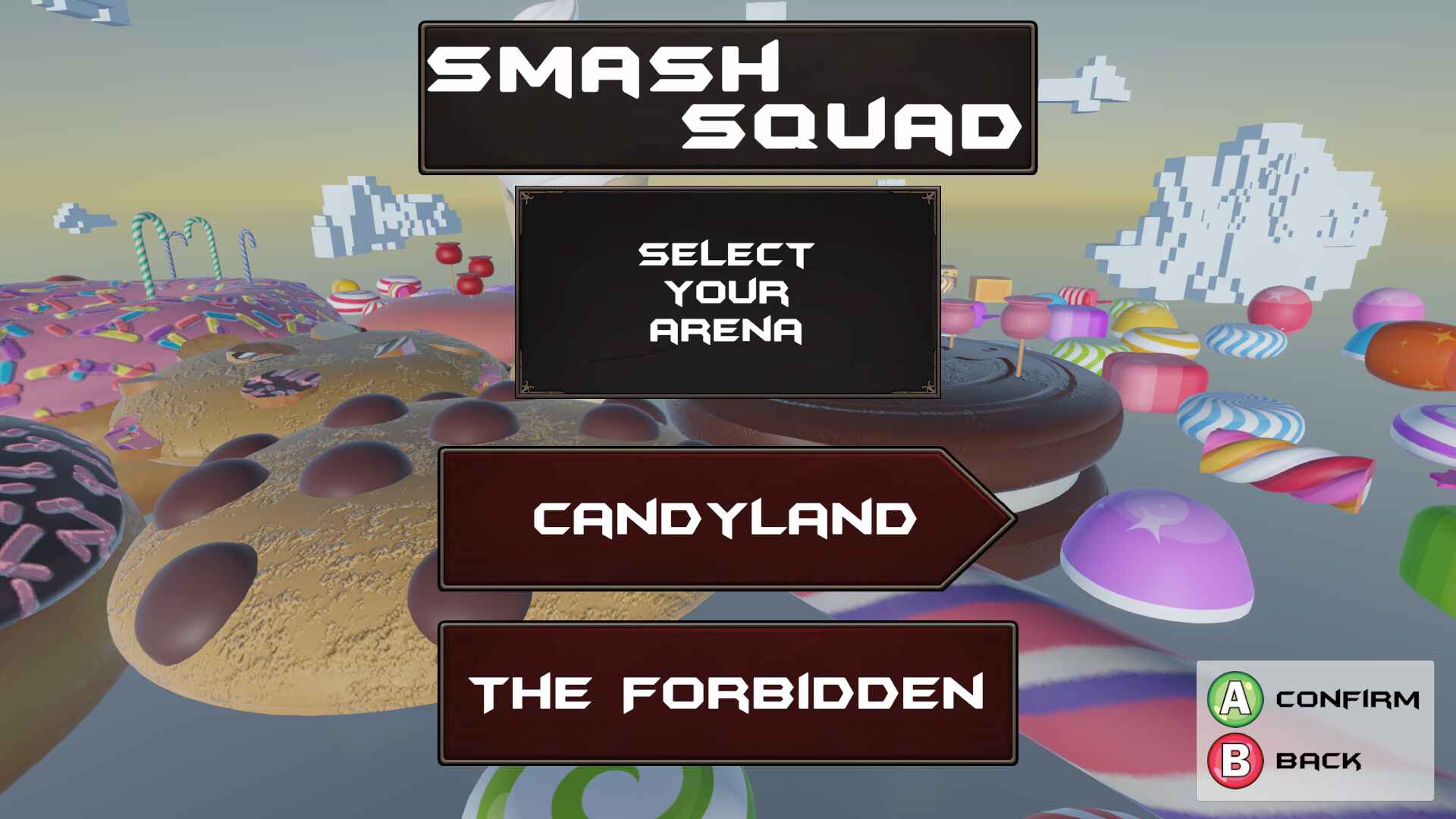
The game features a single, expansive 'Candy-land' themed level. This level is comprised of a series of smaller
islands (in this case made from sweets), and the players must parkour around to reach each other, and avoid the
large holes which will cause the player to fall and loose the match.
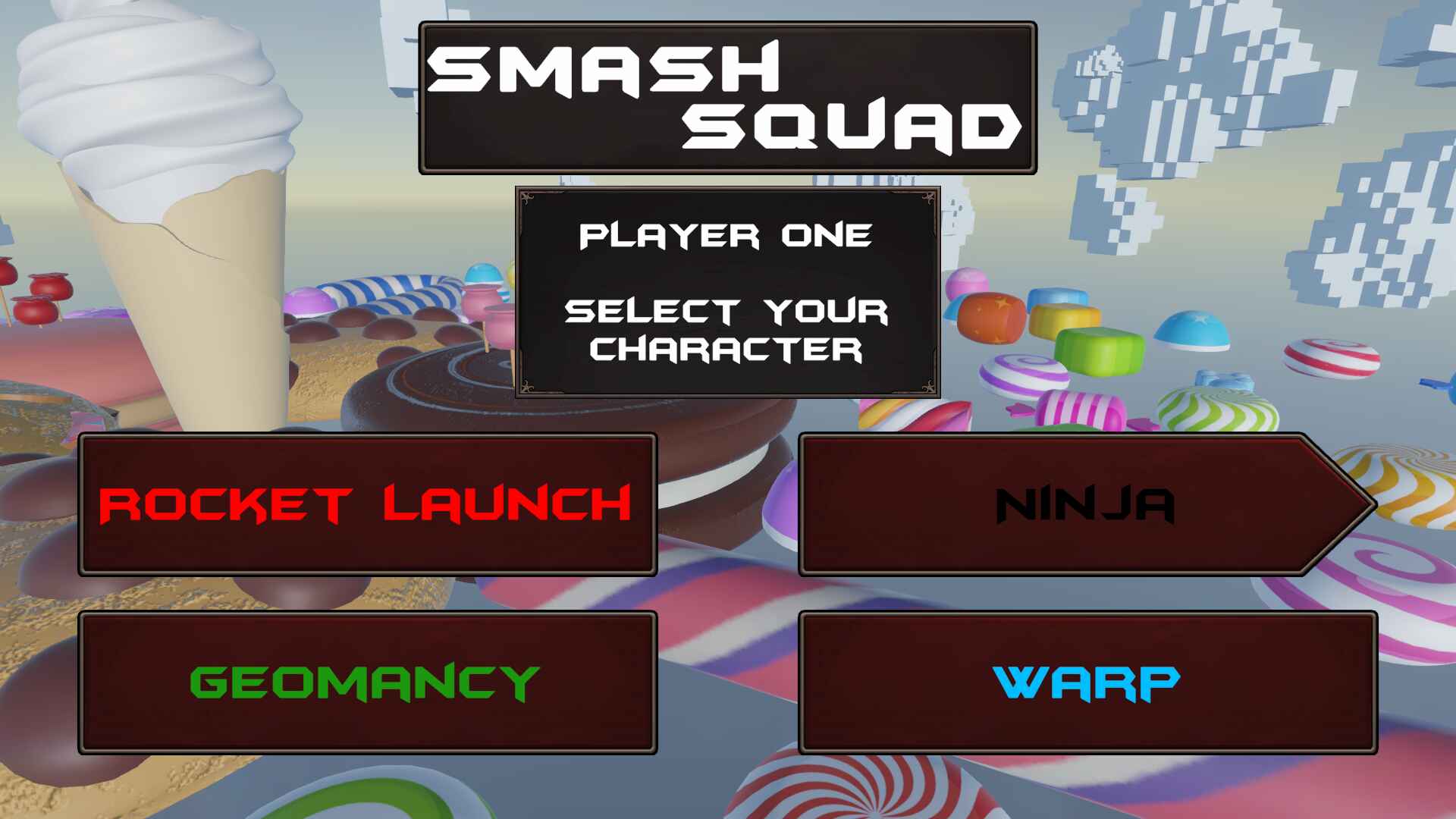
The game features 4 different playable characters, each with
their own unique abilities:
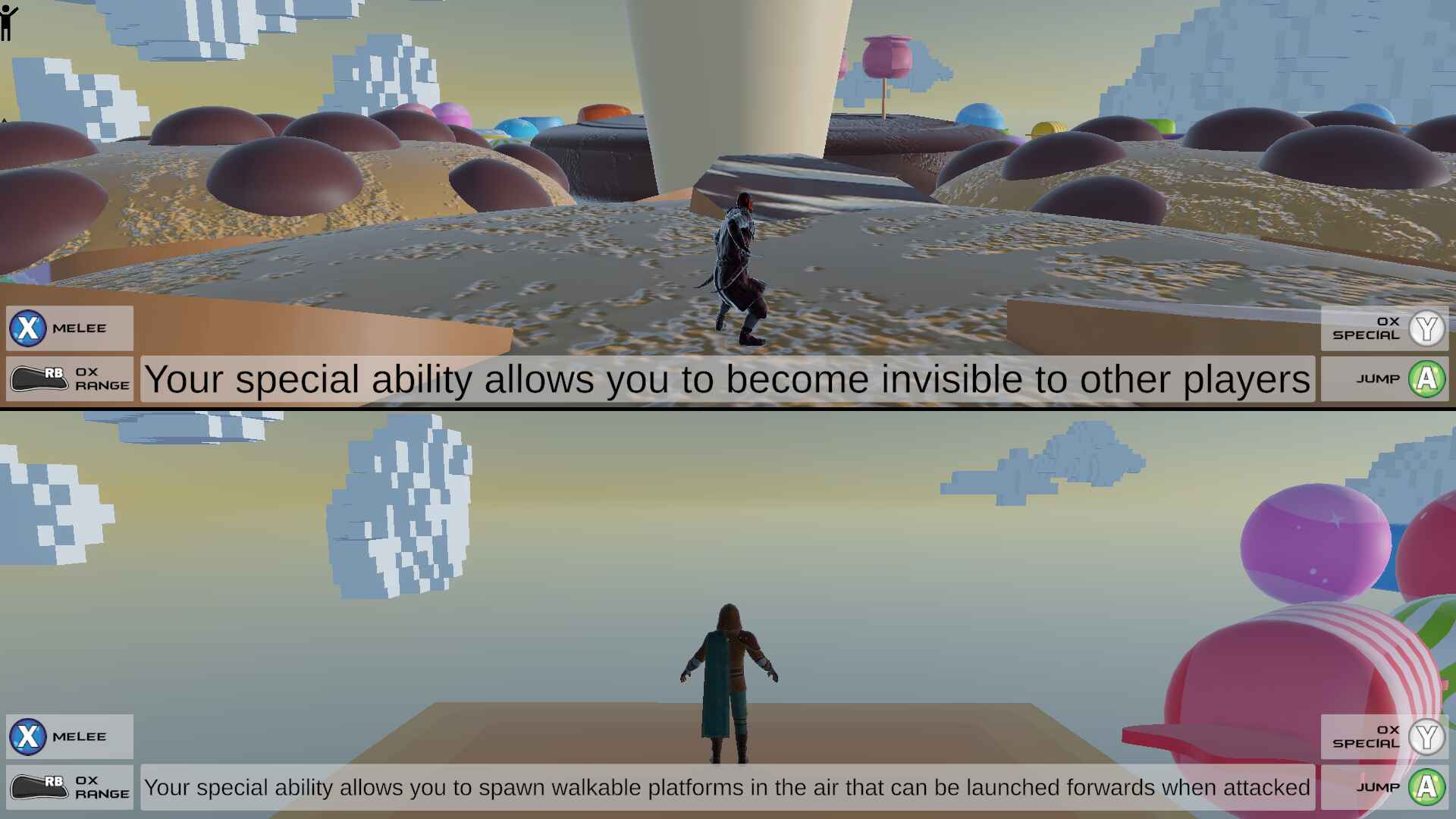
- Ninja: This character can turn invisible for a period of time to the other player.
- Warp: This character can throw a projectile, and teleport to whatever it hits.
- Geomancer: This character can manipulate the environment, summoning platforms below them that can be used to traverse the level, or be launched - hitting other characters with powerful knock back.
- Launch: This character can summon a large explosion at their feet, knocking the character into the air, and dealing massive knock back to other characters near-by.
Credits
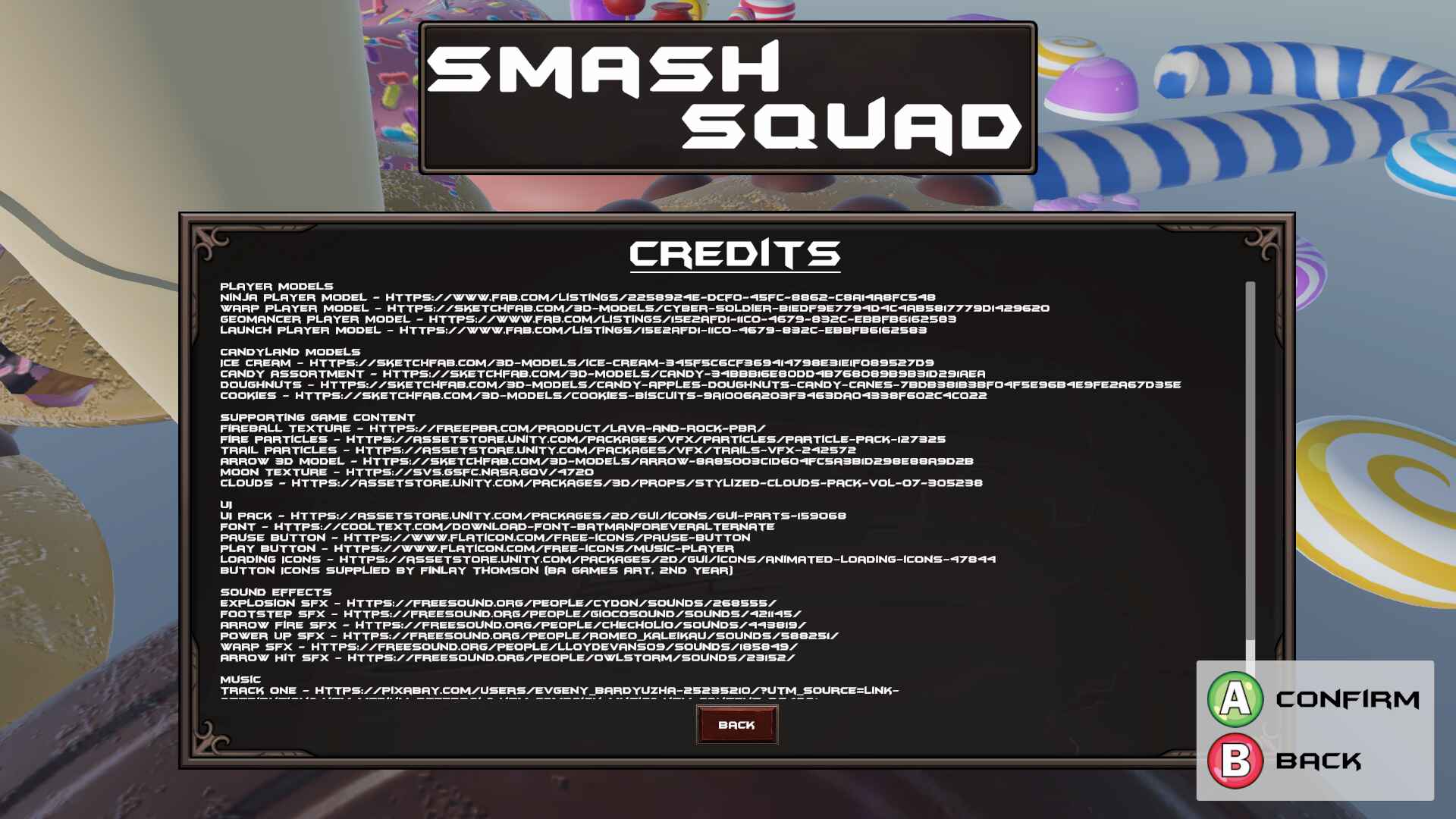
This game was designed and programmed by Thomas Jebson exclusively, using the following third-party assets:
Models
Player Models
Supporting Models
Candyland Level Models
Particles
Textures
- Fireball Texture
- Moon Texture
- UI Textures
- Pause Button Texture
- Play Button Texture
- Loading Icons
- Xbox Button Icons Provided by Finlay Thomson
Fonts
Sound Effects
Music
Reflection
The game 'Smash Squad' can be seen almost as an 3D focused extension to the
exploration into 2D games optimisation
seen in the game 1942. This is because the targeted platform for this game
was the Xbox Series S, with games built for the Universal
Windows Platform (UWP).
Given this platform's
budget-focused hardware choices, particular attention was put on insuring the game ran smoothly. Given the
performance focus needed for this game, it's development explored a variety of
different optimisation tools:
- Unity Addressables: This asset management system enables the asynchronous loading of game assets, which was used to ensure the game remained responsive and operational whilst loading game assets.
- Blender: This game required the creation of some very unique game levels. The built in terrain system was not suitable for this, and loading each of the individual game assets in was very inefficient. To fix this, all the game maps were designed in Blender (using 3rd party models) and exported as a single model.
- Temporal Delayed Updating: This is a technique used to delay the updating of some game objects during runtime based on their importance. This technique was used to spread the load of updating less-important assets across multiple frames, instead of slowing down the main game loop.
Images