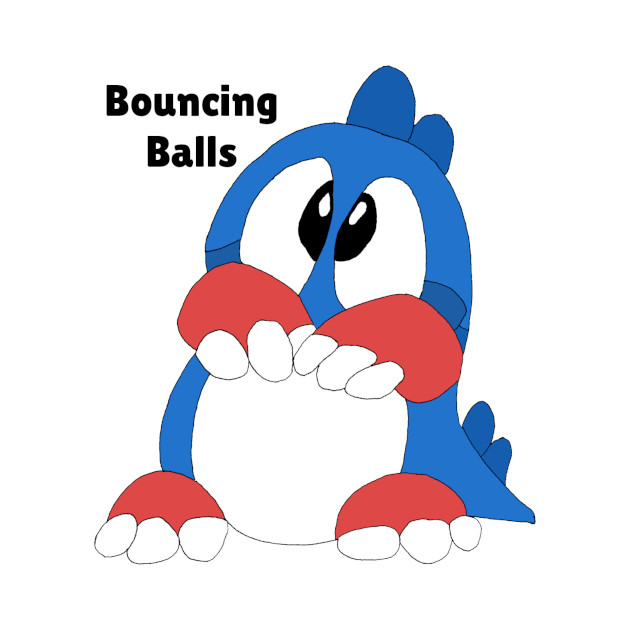
Bouncing Balls
By Thomas Jebson
(Created: October 2024, Updated: April 2026 - Finished)
Academic Project
Skills & Technologies Used





Supported Platforms

Links


Awards
🏆 Academic Result: 68%
About
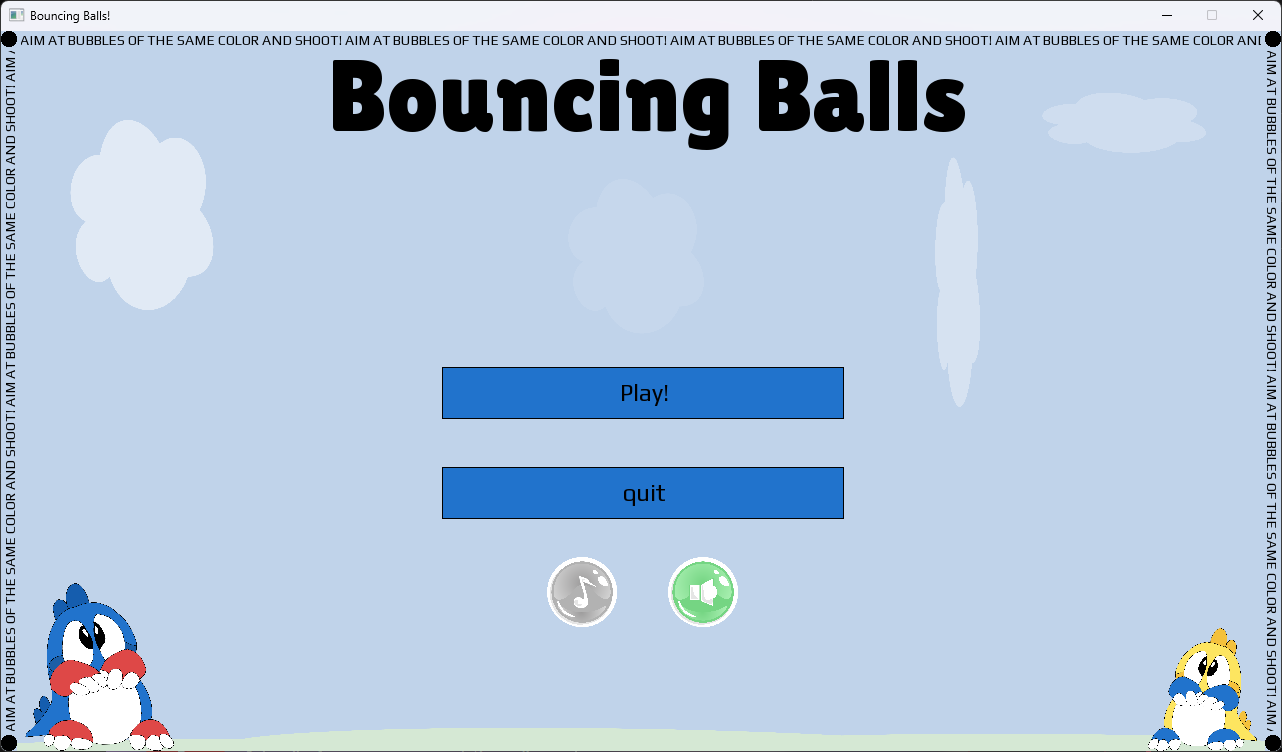
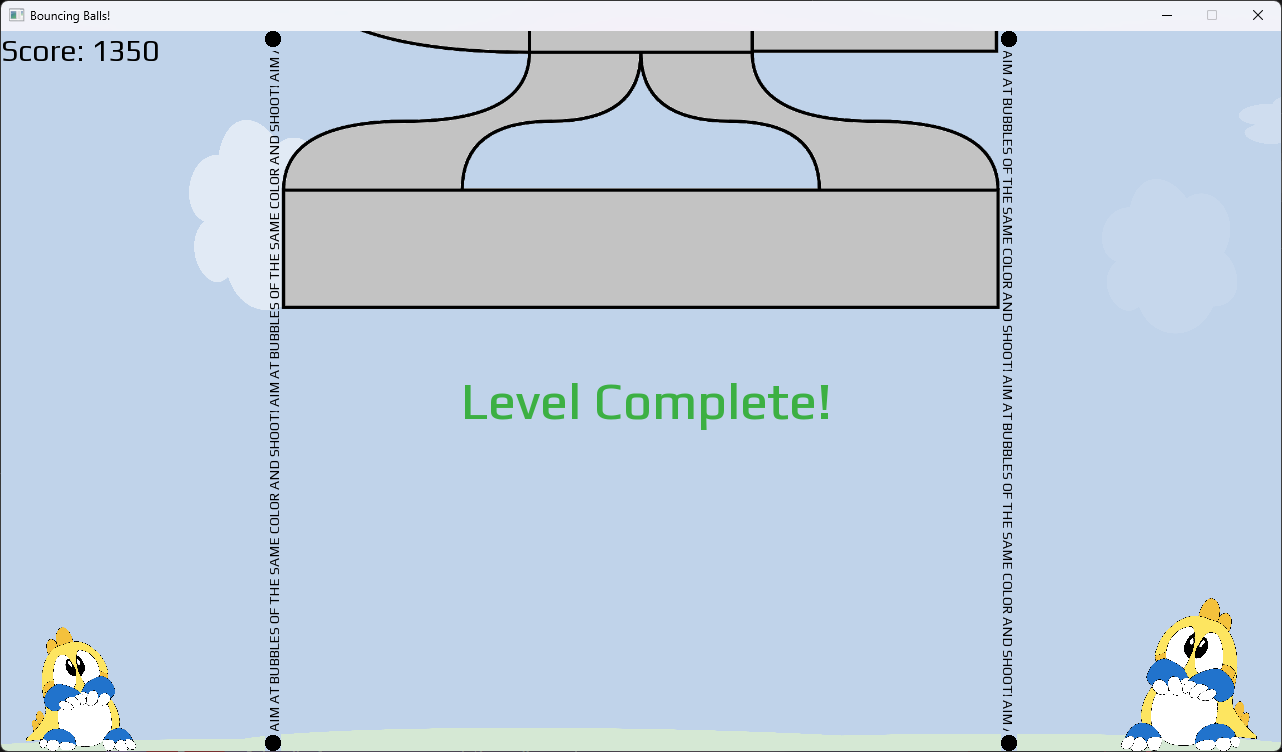
Bouncing Balls is a 2D single player game based on Puzzle Bobble developed by the Japanese video game producer
Taito in 1994. The objective of the game
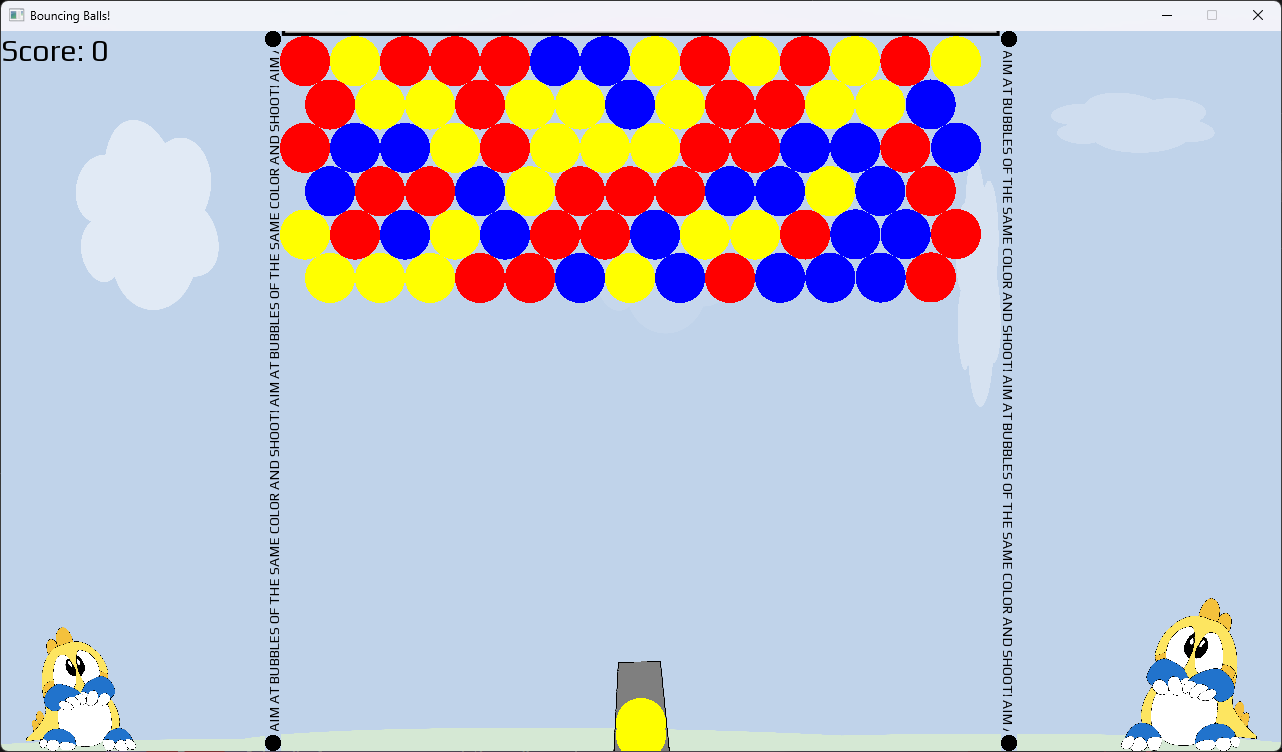
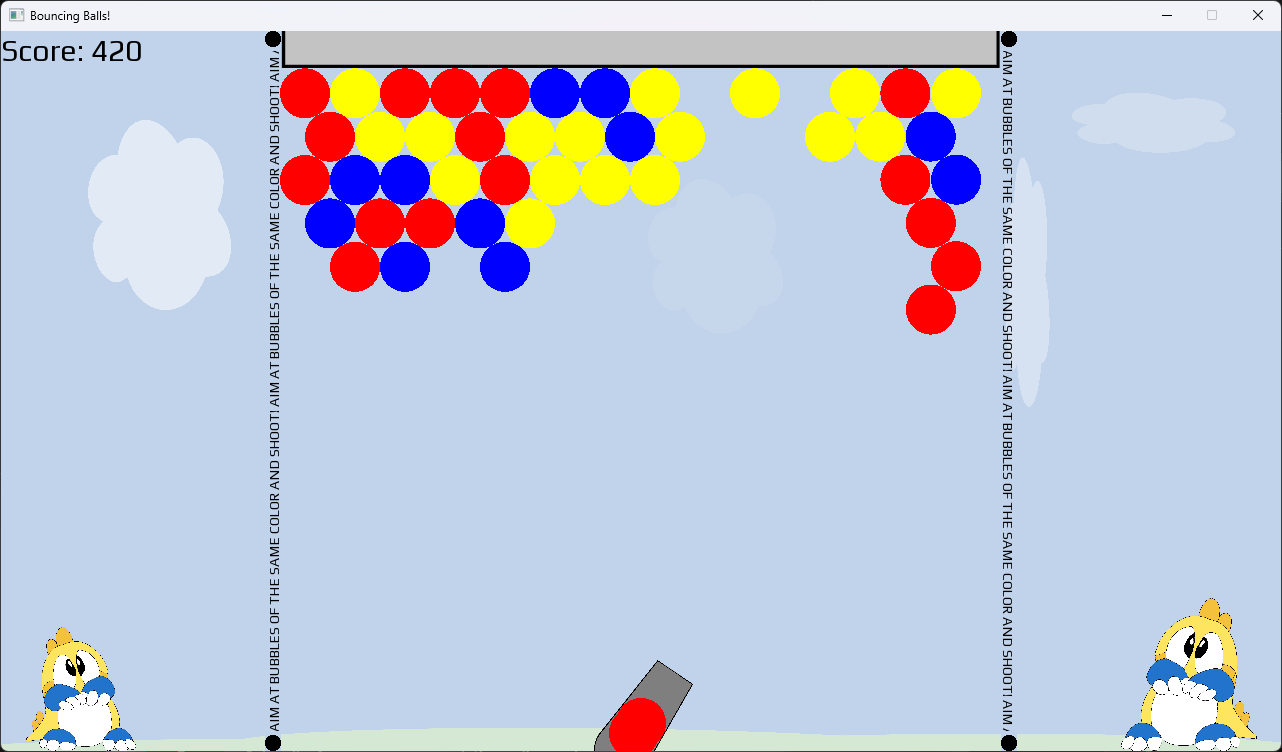
is to arrange balls into groups of at least three, as this causes the
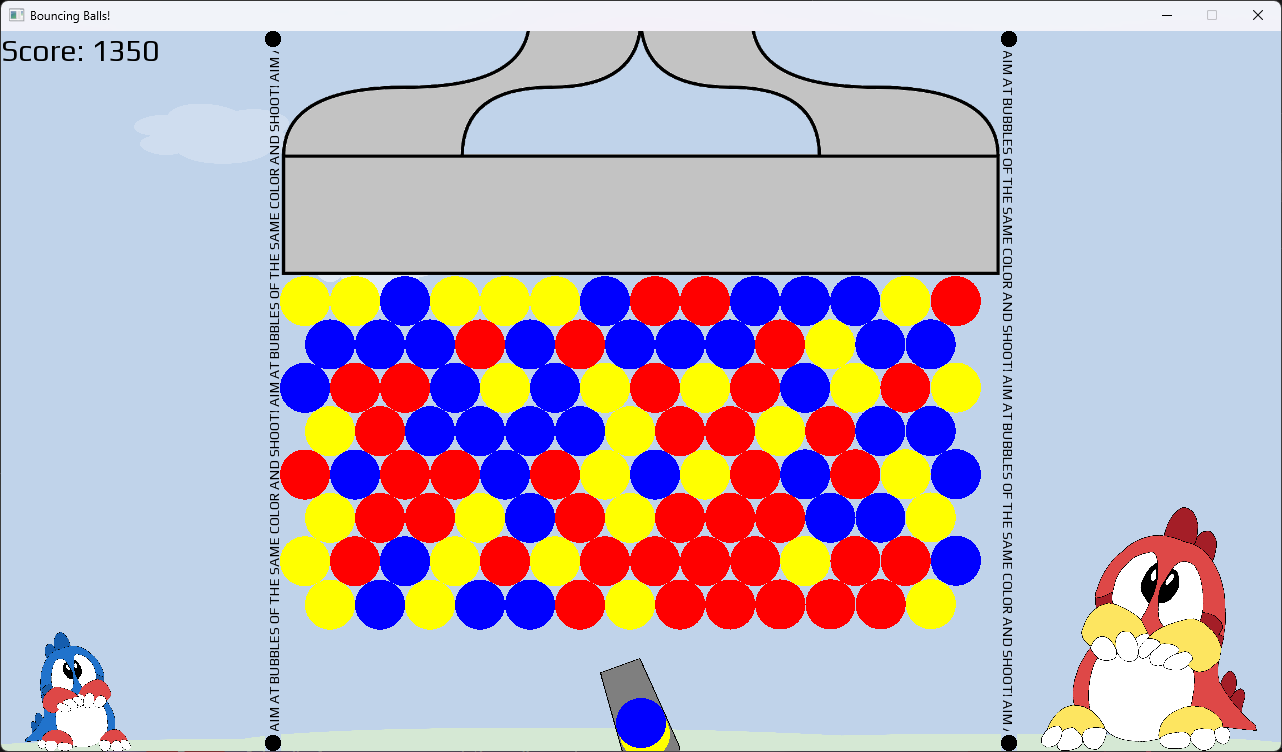
whole group to pop earning the player points. The aim of the game is to pop all the balls before the anvil falls
to the bottom of the screen. The player takes the form of a cannon, which can be used to aim and fire new randomly
coloured balls into the existing arrangement. This game features two playable game
levels.
This game does not feature any assets taken from the original game. In fact, most of the assets in this game were
created by me!
Credits
This game was designed and programmed by Thomas Jebson exclusively, using the following third-party assets:
Fonts
Reflection
This was my first game produced for my BSc Games Programming course at The University of Northampton. Initially I
was struggling to find inspiration for how to design the game - and wanted something that paid homage to the
original game. On a trip to EGX/MCM Comic Con with the university in London, there was a talk about the
applications of
games in therapy, and ultimately this would inspire the designs for this game. The
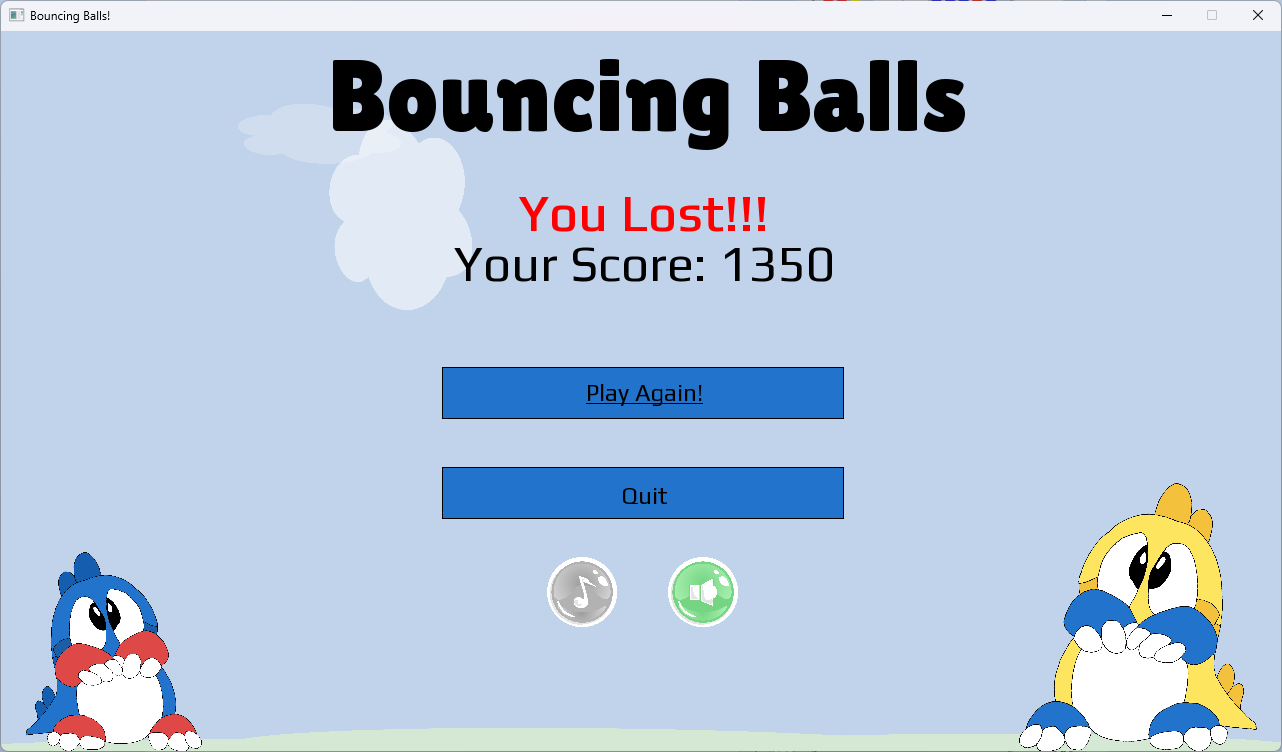
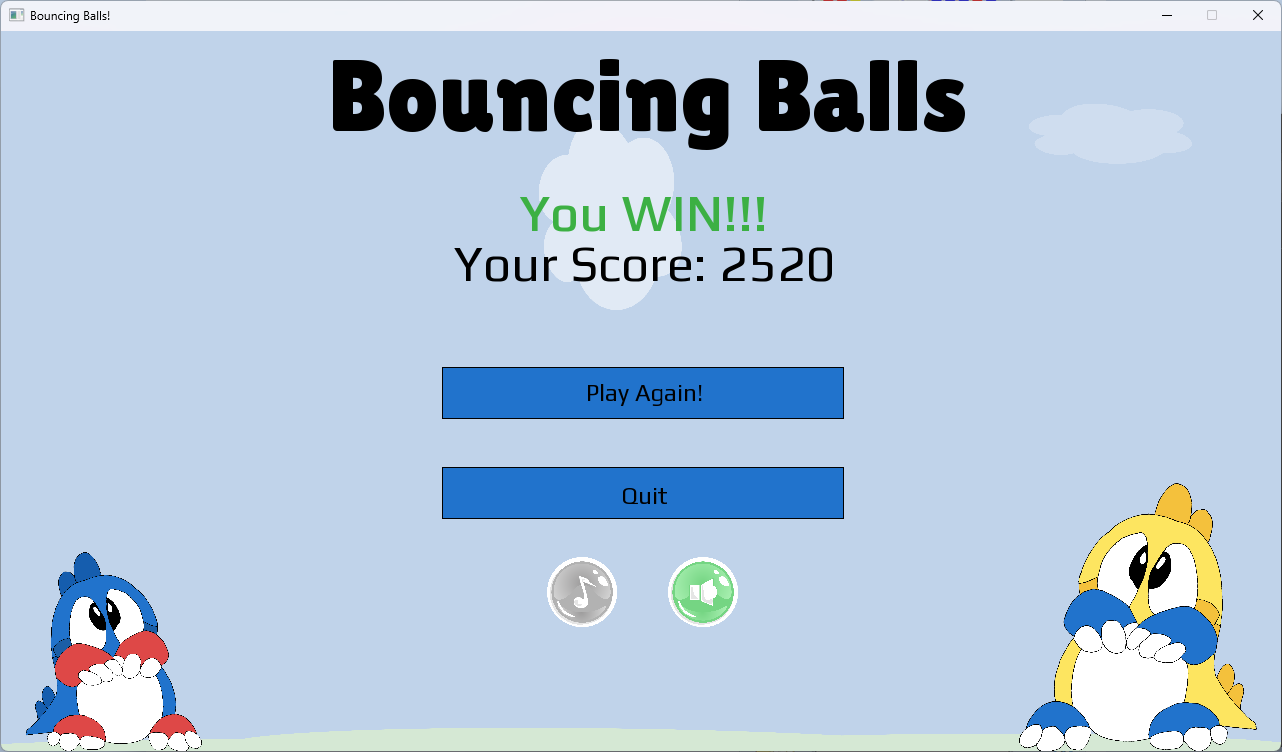
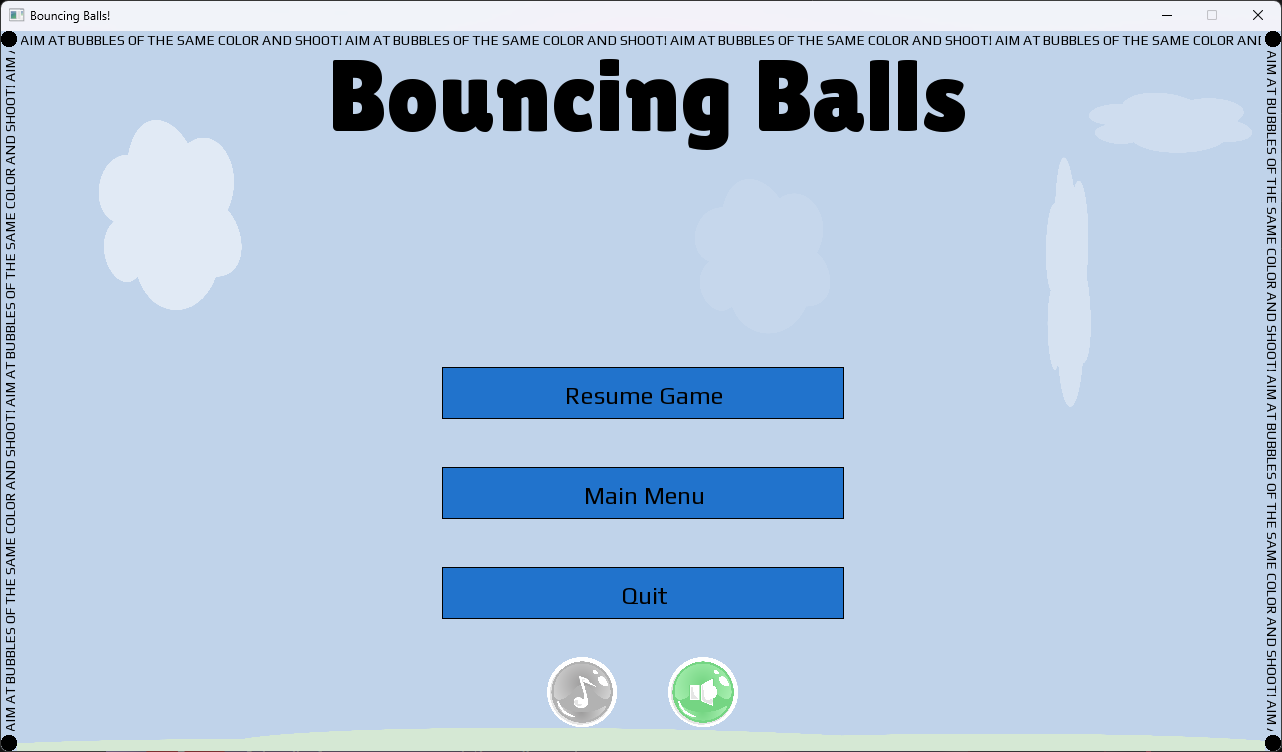
hand-drawn dragons seen in some
of the
game menus were a nod to the original game, who's cover artwork is displayed below (image courtesy of Taito):
 When starting work on the development for a game, I like to try and identify what would be the hardest problem to
solve - and begin to pick away at it whilst getting the easier work done in the meantime. In the case for this
game, the hardest problem I identified was determining how to traverse the arrangement of balls and determine
which ones to pop. Ultimately, the solution I developed required spreading a 'flag' to all
connected balls
of the same color, and keeping a total of how many flags were placed. Then if the number of flags exceeds the
threshold (in this case 3) - a more traditional array iteration process goes through and destroys all the balls
with a flag.
Overall, this game ended up being reasonably successful and met all the points outlined in
the assignment brief.
However, this game was developed prior to my extensive exploration into games optimisation and could benefit from
being optimised further - particularly the flag spreading algorithm, as this will limit the expansion of the game
to further levels due to the increasing number of balls required. Finally, further exploration into different
mechanics - like locked balls/colors could elevate the game should further development be considered. At this time
there are no plans to continue to develop the game - but the option remains open.
When starting work on the development for a game, I like to try and identify what would be the hardest problem to
solve - and begin to pick away at it whilst getting the easier work done in the meantime. In the case for this
game, the hardest problem I identified was determining how to traverse the arrangement of balls and determine
which ones to pop. Ultimately, the solution I developed required spreading a 'flag' to all
connected balls
of the same color, and keeping a total of how many flags were placed. Then if the number of flags exceeds the
threshold (in this case 3) - a more traditional array iteration process goes through and destroys all the balls
with a flag.
Overall, this game ended up being reasonably successful and met all the points outlined in
the assignment brief.
However, this game was developed prior to my extensive exploration into games optimisation and could benefit from
being optimised further - particularly the flag spreading algorithm, as this will limit the expansion of the game
to further levels due to the increasing number of balls required. Finally, further exploration into different
mechanics - like locked balls/colors could elevate the game should further development be considered. At this time
there are no plans to continue to develop the game - but the option remains open.
Images